About our Pleasant Hill concrete company
Why I started a concrete business for lived-in homes
I learned this trade pouring slabs and footings on new construction, where nobody lives yet and nobody minds the mess. In 2017 I started Driveline Pleasant Hill Concrete to do the same work at houses people actually live in, with kids, cars and gardens in the way. We're based in Pleasant Hill, and most of our calls come from here and the cities around it, so our home page is a good place to see the work we take on.
Concrete is hard to undo, and it doesn't take suggestions once it sets. That's why I care most about the parts you won't see later, like the base, the drainage and the joints. Clay soil is common around Pleasant Hill, and clay swells when it's wet and shrinks when it dries, so a slab on dirt that was only raked level tends to ride along with it. I'd rather spend your money where it holds the slab up. I also care about leaving your house the way we found it, minus the old concrete.
What working with us is like
A job planned around your house
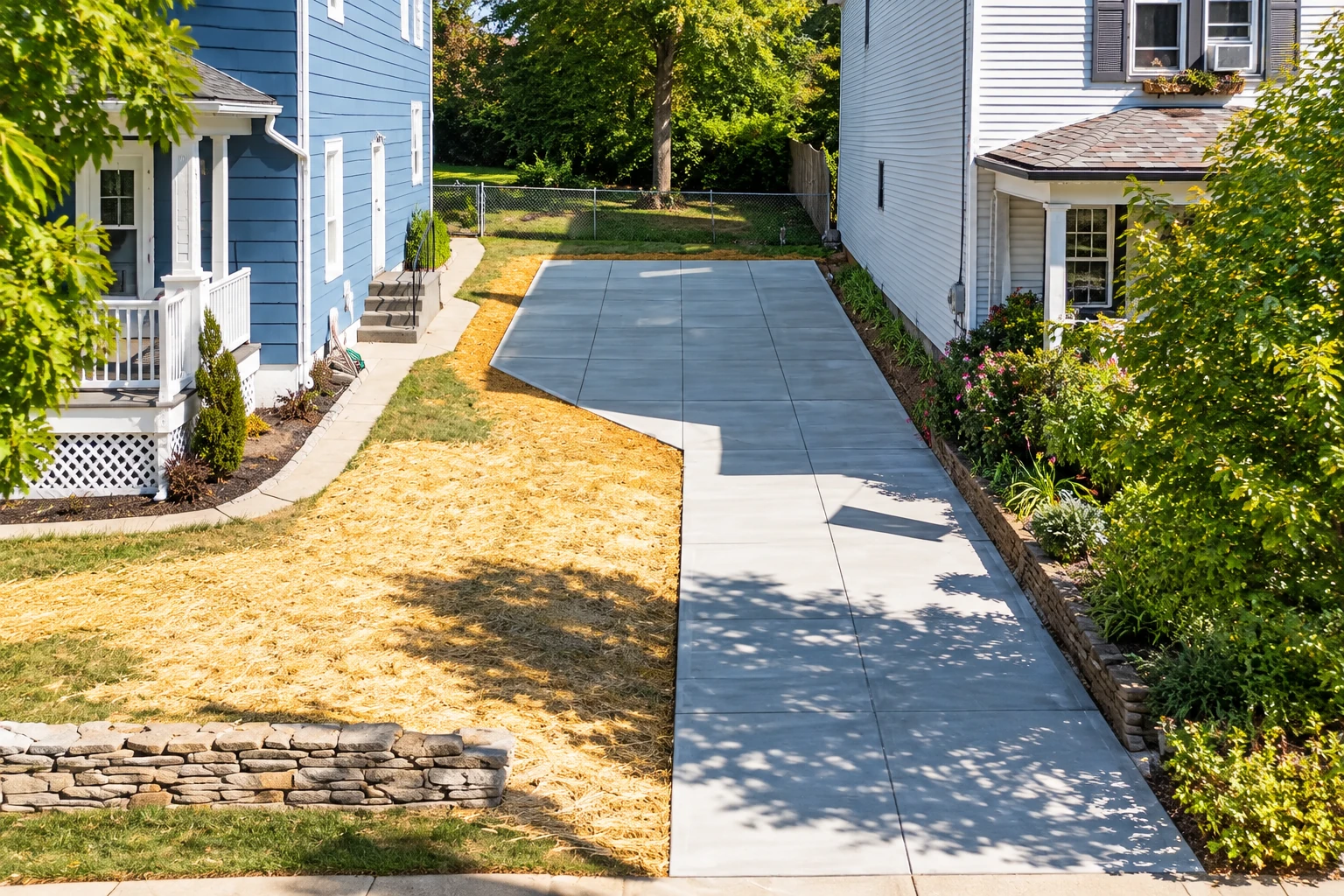
We plan the tear-out and the pour around where your cars park, where the kids play and what's growing next to the forms. When we leave, the old concrete leaves with us and the rest of the yard looks the way it did.
The person who looks writes the estimate
I come out to see each job and write the estimate myself, so the price comes from someone who has stood on your slab, and our own crew does the work with me usually there on pour day. California's contractors board requires a license on any job that runs $1,000 or more in labor and materials, and we're licensed and fully insured.
The base comes before the finish
Before we talk about color or a broom finish, the light brushed texture that keeps a slab from getting slick, we walk you through the base, the drainage and the control joints, grooves we cut so the slab cracks along a line we picked. If the budget gets tight, cut the finish and keep the base, because a plain slab on packed ground outlasts a fancy one on loose dirt.
A straight answer on repair or replace
Sometimes a repair makes more sense than a new slab, and sometimes the real problem is water or soil, not the concrete. We'll tell you plainly when that's the case, even if it means a smaller job for us.
How we handle a concrete job
Look first
Once you call or use our contact page, we come out and look at the cracks, the sinking or the pooling water before anyone talks about a fix.
Dig out the base
We dig out the soft dirt and pack the subgrade, the ground the slab sits on, instead of raking it level and hoping.
Check the water
We check where the water runs before we set forms, so the new slab sheds rain away from your house, not toward it.
Pour and cut
We pour when the heat won't dry the top too fast, cut the joints on time, then let it cure, the wait that lets concrete gain strength before use.
Permits
We tell you which office handles your address, and when a job needs a permit, we handle the paperwork for our part of the work.
Tell us about your concrete job
- Call
- (707) 750-8660