Concrete parking lot building in Pleasant Hill CA - a lot that keeps its shape
Ruts where trucks turn, puddles that never drain, patches on patches? We build concrete lots planned around your heaviest traffic, with cracks kept to the joints.
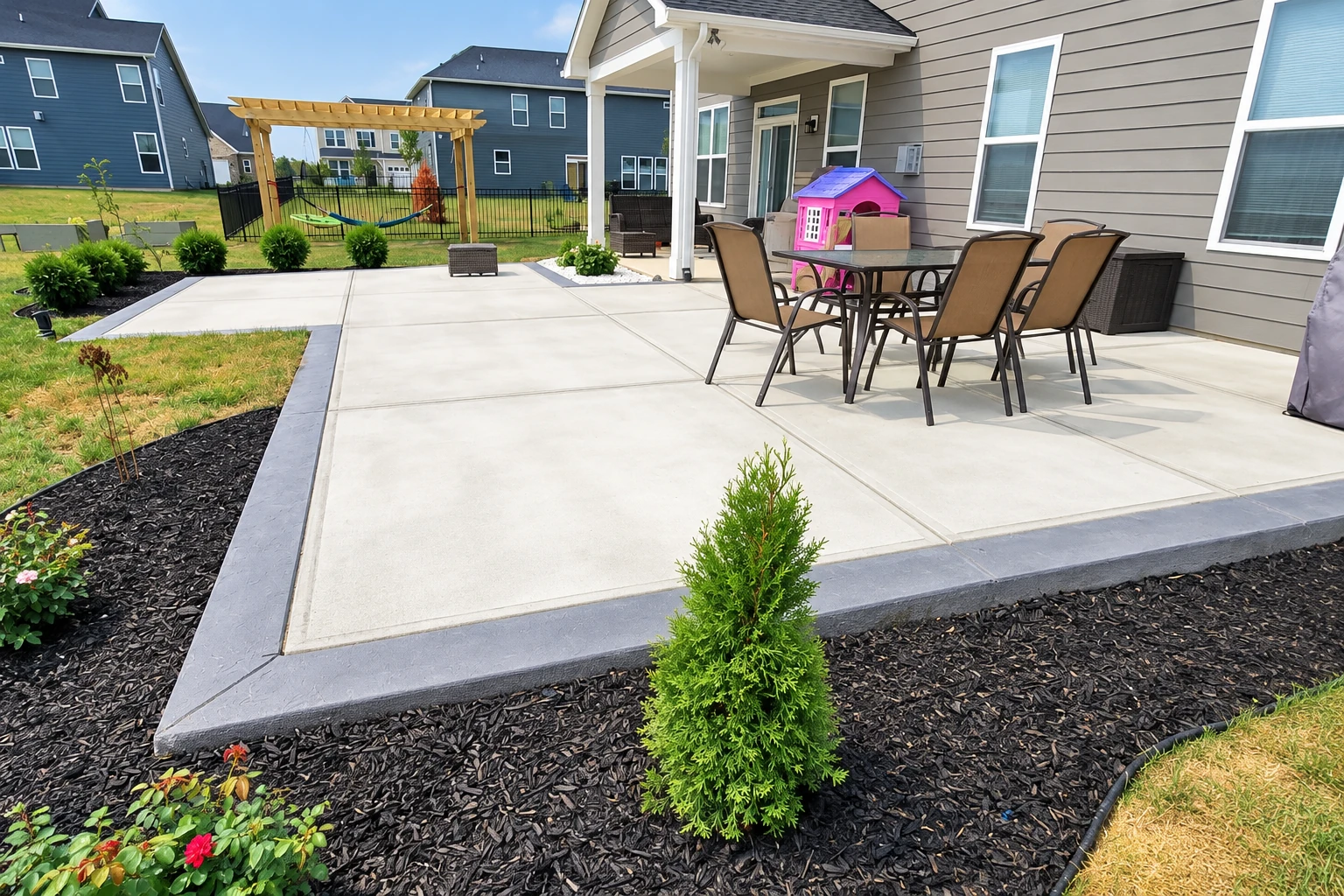
What does it take to build a concrete parking lot in Pleasant Hill?
Concrete parking lot building in Pleasant Hill means we form, pour and finish the pavement your cars, delivery vans and trash truck use every day. We lay it out so the heavy traffic gets the strongest concrete and the whole lot drains, holds its shape and needs little upkeep.
Most calls start with an old lot that's rutted where trucks turn or holds water in the same low spots every winter. Concrete is generally good at this job because it resists getting shoved out of shape by turning cars and sheds rain on gentle slopes. The price mostly moves with the size of the lot, how much old pavement comes out, how thick the truck areas need to be and how much drainage work the site needs, and your own figure comes from the estimate. The schedule turns on whether any street-side work needs a city permit and how much of the lot has to stay open while we work. We're licensed and fully insured, and since California's licensing board puts concrete pavement under its concrete contractor class, it's fair to ask every bidder which state license class they hold.
What happens after you call us about a parking lot?
Call us or send the form
Call (707) 750-8660 or use the form, and tell us roughly how big the lot is, where the driveways and dumpster sit and whether you have plans. That's enough for us to set a time to come out.
I walk the lot with you
I come out myself, look at the old pavement and where the water goes, and ask how the lot gets used, starting with where the trash truck and deliveries go. You get a written estimate with the scope and the price, so you know the number before anyone breaks ground.
We plan around your traffic
We schedule the work around your tenants, customers, cars and neighbors, inside Pleasant Hill's construction hours of 7:30 a.m. to 7:00 p.m. on weekdays and 9:00 a.m. to 6:00 p.m. on weekends. If street-side work needs a permit, our paperwork goes in first, so that's usually what sets the start date.
We pour, finish and clean up
Our own crew does the work, and I'm usually there on pour day because that's when the decisions you can't undo get made. When we're done, we haul off the old concrete and leave the place the way we found it, minus the ruts.
How we build a concrete parking lot and the pieces around it
On a lot, the heaviest traffic decides the design, so before anything gets drawn we find out where the trash truck and deliveries go, since the industry's parking lot guidance flags dumpster access as a spot that may need special attention. Then we dig out to the subgrade, the ground the slab sits on, and pack a real base instead of raking dirt level, because a raked base settles and takes the slab down with it. We set the grades so water runs off the lot and away from the building, place rebar, the steel inside the slab that keeps cracks tight, where the loads call for it, and pour early in the day so midday heat doesn't leave a weak, dusty top. A broom finish gives tires and shoes some grip, and we cut control joints, the planned lines where the slab is allowed to crack, while the concrete is still fresh. If the budget gets tight, I'd rather you skip a fancy finish than skimp on the base, because nobody sees the base on day one and everybody sees the dips a few winters later.
Some lots need more than a slab. Light poles, sign posts and low walls along the edge sit on concrete footings, and we pour those as part of the same job so they line up with the lot's grades. If the building the lot runs up against has a corner that's settled, look at foundation raising before we set new pavement against it, because concrete is hard to undo once it's poured.
Get a free on-site estimate for your parking lot
We reply within one business day to set a time, then I come out, walk the lot with you and write up the estimate, with no obligation to go ahead. Satisfaction guaranteed on every job.
Pleasant Hill parking lot questions
How much does a new concrete parking lot cost in Pleasant Hill?
Each lot gets its own price, and your number comes from the written estimate after I've walked the site. The biggest movers are the square footage, the thicker sections where trucks drive and turn, tearing out and hauling off the old pavement, and any drainage or stormwater work the layout needs. Doing the lot in phases so part of it stays open usually adds a little, and a plain broom finish keeps the cost down.
Why does a concrete parking lot have joints?
Joints are there because concrete cracks on its own, and without them those cracks would run across and along the slab wherever they pleased. The joint lines in a finished lot are part of the design, set so the cracking happens down in the joint instead of across your parking spaces. That's also the honest answer to whether the new lot will crack like the old one. It will, usually right where we planned it to.
How do I keep the joints in a concrete parking lot clear of water and debris?
Keep them sealed. Sealant keeps rainwater and hard grit, the stuff that can't be squeezed when the slab moves, out of the joints as much as possible, which makes resealing part of a lot's regular upkeep. We go over joint sealing with you when the lot is done, so you know what to watch for when it's due.
Do I need a permit to build a parking lot in Pleasant Hill?
You need an encroachment permit from the city for any work in the public right-of-way or an easement, and its list names sidewalk, driveway and roadway pavement, so the spot where your lot meets the street is the part to check. Parking lots themselves aren't on that list, so ask the city about your address before work starts. We'll tell you which office handles your address, take care of the paperwork for our part when a permit is needed, and point you to the right office for anything outside it. The city takes applications online with plans uploaded, so it helps to have your plans in digital form.
Does a new parking lot in Contra Costa County need stormwater controls?
A larger one can. Contra Costa County's stormwater permit requires projects over certain thresholds to build properly sized stormwater facilities, and in general the county includes projects such as facilities and roads that create or replace 5,000 square feet of impervious surface, the hard cover rain can't soak into. Ask your designer how that applies to your lot early on, because it can change the layout and the drainage we build.
How long will my parking lot be closed for new concrete?
Usually only the section we're working on is closed, because we plan the work in sections around how your lot gets used. Each section stays coned off while it cures, which is the wait while the concrete gains strength before cars go on it. At the estimate I'll show you how we'd stage your lot so deliveries and the trash truck can still get in.
Other work that goes with a new lot
Concrete footings
Light poles, sign posts, carports and site walls each need a solid footing, poured to the right depth so they stay plumb beside the new pavement.
Foundation raising
When a building beside your lot has sunk at one corner, lifting it first means the new pavement meets the doors and walkways at the right height.
Get your parking lot planned and priced
Call Driveline Pleasant Hill Concrete at (707) 750-8660 before the design is drawn, because moving a dumpster pad on paper is a lot cheaper than moving it in concrete.