Concrete retaining walls in Pleasant Hill CA - a slope that stays where you put it
A slope crowding your yard, or an old wall leaning? We build a concrete wall that holds the ground back and lets water out.
What does a concrete retaining wall do for a Pleasant Hill yard?
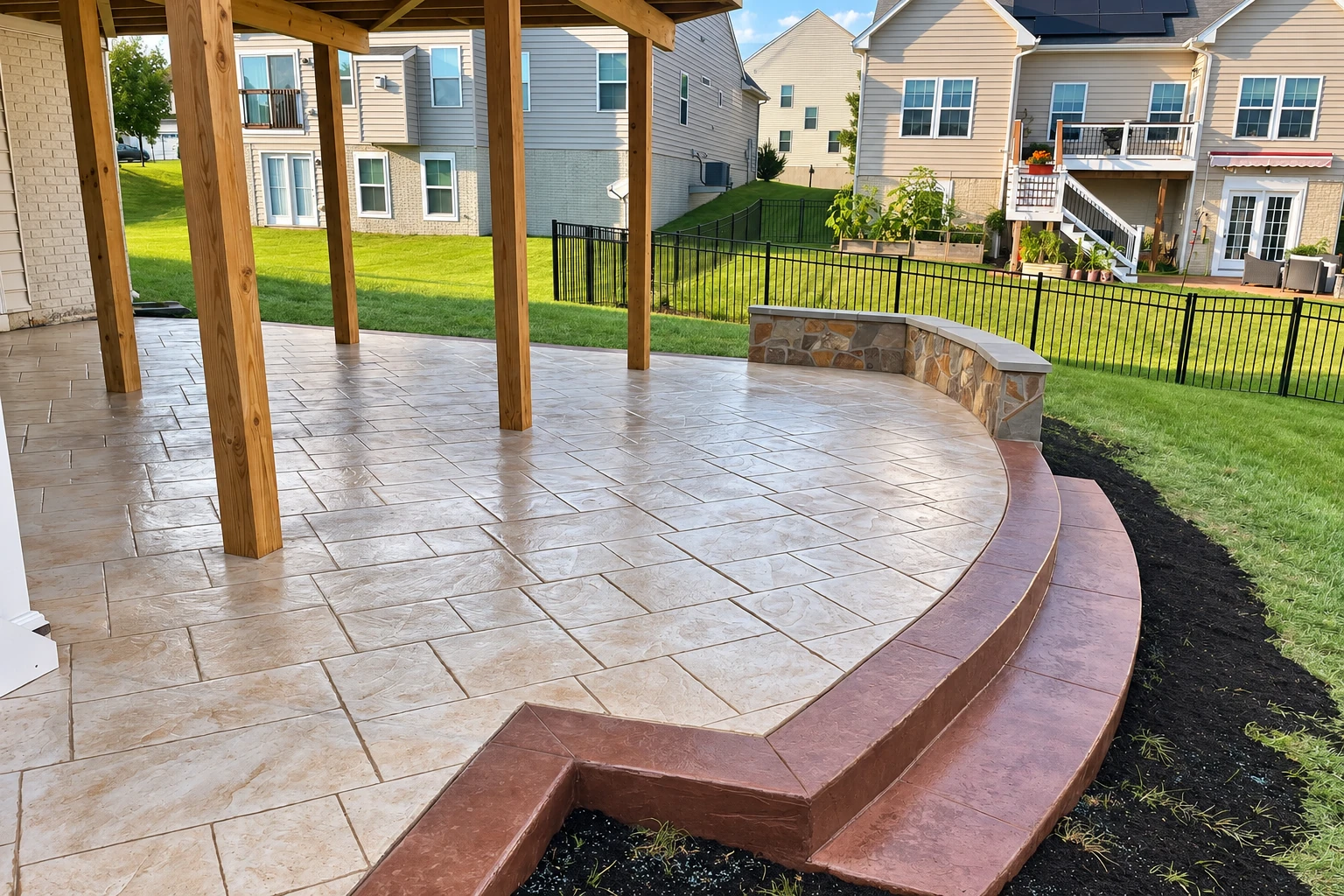
A concrete retaining wall holds a slope back so you get level, usable ground and the dirt stays where it belongs. In Pleasant Hill we build them as a reinforced concrete wall tied into a reinforced concrete footing, the buried base that carries the wall and holds it in place.
Most calls start with a hillside creeping toward the patio, an old wall that's begun to lean, or a yard that's all hill and no flat. The price depends on how tall and long the wall is, how hard the spot is to reach with a crew and a truck, how plain or involved the design is, and how much digging and drainage the job needs. The schedule depends on that same digging, any permit, and curing, the days concrete needs to gain strength before it takes the weight of the soil. Your written estimate gives you the number for your wall. We work across Pleasant Hill and the cities around it, we'll tell you which office handles your address, and if the job needs a permit we take care of the paperwork for our part.
What happens when you call about a retaining wall in Pleasant Hill?
Call or send the form
Tell us roughly where the wall goes and what the slope is doing. We'll find a time for me to come see it.
I walk the slope with you
I look at the ground, where the water runs, and how you use the yard. You get a written estimate with the price for your wall and its drainage, so the number is settled before anyone digs.
We plan around your household
If you go ahead, we plan the dig, the deliveries and pour day around your cars, your kids and your neighbors. Pleasant Hill allows construction from 7:30 a.m. to 7 p.m. on weekdays and 9 a.m. to 6 p.m. on weekends, so we schedule the noisy work inside those hours.
We pour and clean up
Our own crew does the work, and I'm usually there on pour day. When we leave, the old concrete leaves with us and the yard looks the way we found it, plus one wall.
Concrete retaining walls and the level ground they make
We mark where the wall and its footing go, then dig the footing down to firm ground, because a footing on loose dirt moves when the dirt does. We tie in rebar, the steel bars that let the concrete take the soil's steady push, then form and pour the footing and form and pour the wall on top of it. Most wall trouble is water trouble, so the drainage behind the wall gets as much attention in our bid as the wall does, and so does where that water ends up once it's out. Bring your planting plans to the estimate, because the sprinklers you add later are water the wall will have to live with. Concrete is hard to undo, which is why we fuss over the parts that get buried.
A wall usually exists to make flat ground, and flat ground usually gets used. On a sloped lot, a wall is often what makes room for a pool, and we build concrete pool decks that send their water away from the wall instead of letting it soak in behind it. If the new level space becomes a shed, a shop or a storage room, we handle the concrete floor installation too, so one crew sets the heights for both and nothing ends up tilted toward the wall.
Get a written estimate for your retaining wall
We get back to you within one business day to set a time, then I come out, look at the slope and write up a free estimate at your property. There's no obligation, so you can take the estimate and think it over.
Retaining wall questions from Pleasant Hill
What does a concrete retaining wall cost in Pleasant Hill?
Retaining wall construction in the Bay Area usually costs about $50 to $65 per square foot, and that's the going rate around here, not a quote. Where your wall lands depends mostly on its size, how easy the site is to work and how involved the design is. I'll give you a written figure for your wall at the estimate.
What causes a retaining wall to fail?
Poor drainage is by far the most common reason retaining walls perform badly, because water trapped behind a wall pushes on it. Weep holes, small openings that let water seep out through the face, relieve that pressure but are likely to clog at some point, and drains built so they can be cleaned out are more reliable. That makes how each bid handles water one of the best ways to compare them.
Is a concrete retaining wall right for a sloped or narrow yard?
Often yes for a narrow yard, but not for ground that tends to settle. Washington's highway agency puts this kind of wall's base at about half the wall's height, against about 70 percent for walls built on layers of reinforced fill, so where a wall is cut into an existing slope the narrower concrete base is often what makes it the practical choice. The same guidance says these walls handle sinking ground worst and aren't used where the ground is prone to settle, and Texas highway guidance adds that walls do best off slopes, since a slope in front of a wall sharply cuts the soil's resistance. If your yard is prone to settling, a different kind of wall is worth weighing, and I'll say so at the estimate.
Do I need a permit from the City of Pleasant Hill for a retaining wall?
You need an encroachment permit if any part of the work is in the public right-of-way or an easement, because the City of Pleasant Hill requires one for that. For the rest of your project, the city's Online Permit Guide builds a list of permit steps from your address and project details. It's only a guide, and applications go through the PHill Online Service Center, so run your project through it and we'll go over the list with you at the estimate.
How do I check if my Pleasant Hill property is in an earthquake hazard zone?
Enter your address into the California Geological Survey's EQZapp tool to see whether the property lies in a regulatory earthquake hazard zone. Within those zones, local governments must require a site-specific geotechnical study, a check of the ground's hazards, before new residential development. It's good to know early whether your lot is in one.
What license does a concrete contractor need in California?
California's contractor rules set a C-8 Concrete Contractor class for contractors who form, pour, place, finish and install concrete work. You can ask any bidder which license class they hold, and it's a fair question before you sign anything. We're licensed and fully insured, with satisfaction guaranteed on every job.
Work that often goes with a retaining wall
Concrete pool decks
If the level ground your wall creates is meant for a pool, the deck is the next pour, and it should be planned with the wall's drainage in mind.
Concrete floor installation
When the new level ground becomes a shed, shop or storage room, it needs a solid floor set at the right height for the yard around it.
Send us your slope and rough measurements
Call (707) 750-8660 or use the form with the wall's rough length and height, a few photos of the slope and any sidewalk or easement nearby, so I show up already knowing what the ground is up to.