
Concrete sidewalk building in Pleasant Hill CA - a walk that drains away from the house
Muddy path to the door or a walk that puddles by the step? We pour a new sidewalk that sheds rain and grips underfoot.
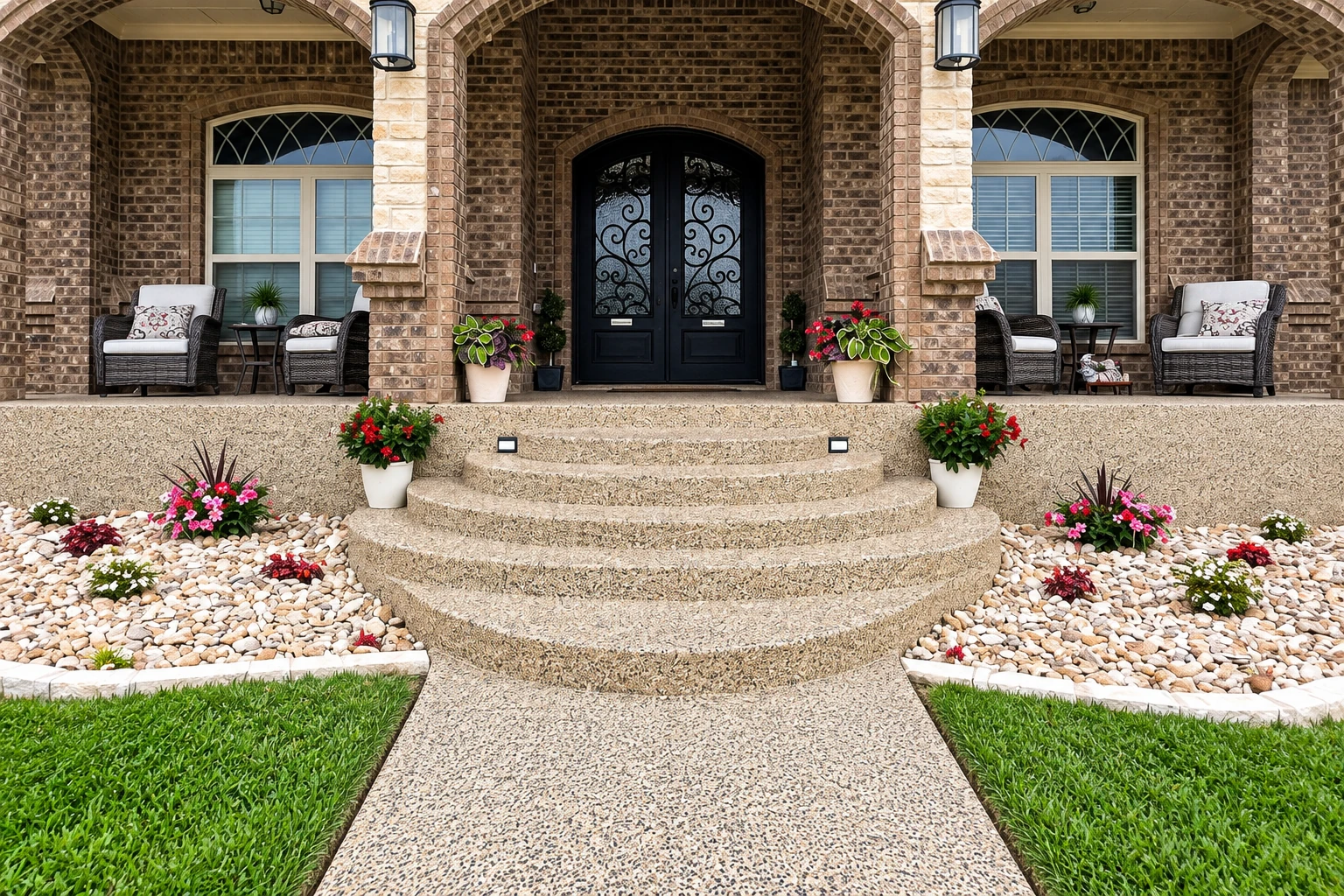
What does it take to build a concrete sidewalk in Pleasant Hill?
Concrete sidewalk building in Pleasant Hill starts with laying out a new walk and digging out the soft topsoil and roots. Then we pack the ground and form, pour and finish concrete on it, so you get a path to your door that drains away from the house and doesn't turn to mud every winter.
Most calls start with a dirt path the lawn gave up on, a walk that puddles by the front step, or old concrete that has lifted and started tripping people. The price moves with the length and width of the walk, how much old concrete or root has to come out, whether it crosses the driveway and what finish you pick. The schedule turns on the weather and on curing, the wait while concrete hardens before you can use it. A walk along the street also needs a city permit, and we take care of the paperwork for our part of that. We're based in Pleasant Hill and work across it and the cities around it, and the estimate I write after walking your route gives you the number for your own job.
What happens when you call about a new sidewalk in Pleasant Hill?
Call or send the form
Tell us roughly where the walk should go and whether it crosses the driveway, and send a few photos if you have them. We get back to you and set a time for me to come out.
I walk the route with you
I look at the ground, see where the water would run, ask how you use the space and write up the estimate myself. It lays out the route, the base work, the finish and the price, so you can see what you're paying for before anything gets dug.
We dig, pack and pour
Our own crew plans the work around your house, your cars and your neighbors, and I'm usually there on pour day. On the street side, city permit conditions limit right-of-way work to 8:30 a.m. to 4:00 p.m., or 9:00 a.m. to 3:00 p.m. on Contra Costa, Monument and Taylor Boulevards, so we schedule the pour inside those hours.
We clean up and leave
We haul off the old concrete and the dirt we dug out, and we leave the yard the way we found it, minus the old walk. The only job left after that is staying off it for a bit, and the questions below say how long.
How we build a concrete sidewalk, and the work that often goes with it
I care most about the parts you won't see once it's poured, so we start with the route and the slope. A walk should shed water away from the house, and we settle that before anyone mixes anything. We dig out the topsoil and anything growing in it, then pack the subgrade, the ground the slab actually sits on. We also check that it gives the same support where it crosses a utility trench or meets the driveway, since that's where the ground likes to change. Where cars cross the walk, it may need to be thicker or carry rebar, steel bars that keep the concrete from pulling apart if it cracks. Then we set the forms with a steady fall away from the house and no low spots for water to sit in, and we pour. We finish it with a broom finish, a light texture dragged across the top so your shoes grip, since smooth concrete and rain don't get along. If the budget gets tight, I'd rather you trim the finish than the base, because nobody sees the base on day one and everybody sees it when the walk sinks.
A new walk often leads somewhere that needs work too. If it ends at a garage with a cracked or sinking floor, garage floor concrete is the same base-first job with a roof over it, and both are easier to plan at once. If you'd like the walk to look like more than gray concrete, decorative concrete adds color or pattern, though on a walk I'll still steer you toward a texture that grips when it's wet.
Get a written estimate for your new sidewalk
We reply within one business day to set a time, and I come out to walk the route and write up a free estimate at your property. There's no obligation, so if the number doesn't suit you, we shake hands and that's that.
Sidewalk questions from Pleasant Hill homeowners
Do I need a city permit for a sidewalk along the street in Pleasant Hill?
Yes, work in the public right-of-way or an easement, such as a sidewalk along the street, needs an encroachment permit from the Pleasant Hill Engineering Division. That permit is the city's OK to work on public ground. The city's checklist asks for insurance documents, a plan or sketch of the work area and site-specific traffic and pedestrian control plans. A 2013 city FAQ said permits went only to licensed, insured contractors with a Pleasant Hill business license, so check current terms with that office. We're licensed and fully insured, we take care of the paperwork for our part of the work, and we'll point you to the right office for anything outside it.
How much does a concrete sidewalk cost in Pleasant Hill?
Concrete sidewalk in the San Francisco metro area usually costs about $6 to $10 per square foot. That's the going rate in the area, not our price. The estimate I write after walking your route turns it into a number for your walk, and we back the work with satisfaction guaranteed on every job.
When can I walk on a new concrete sidewalk?
You can usually walk on a new slab within about 48 hours, but concrete takes a month to fully cure. To be safe, wait about a week before anything heavy crosses it, like a loaded wheelbarrow or a car at the driveway crossing. Curing should start right after finishing, so ask any contractor, us included, how they'll handle it on pour day.
Who is responsible for the sidewalk in front of my house in Pleasant Hill?
You are, because under the California Streets and Highways Code a damaged sidewalk is the adjacent property owner's responsibility. Pleasant Hill also requires owners to maintain that sidewalk even though it sits in the city's right-of-way, and you can ask the city to inspect it. Work there is built to the city's public works standards, which draw on Caltrans, county and city details and go with the stricter one where they differ.
How do I keep a new concrete sidewalk from cracking?
Nobody can promise concrete won't crack, but you can decide where it does, and that's what control joints are for. They're shallow grooves cut across the walk so the crack happens in the groove instead of across the middle. They have to go in on time, because when joints are cut late or skipped, the concrete picks its own spots, and its taste is terrible.
What causes a concrete sidewalk to lift or crack years later?
Tree roots and soil that swells and shrinks are the usual causes, because they keep moving long after the pour. That's why where the walk runs and what sits under it count for more than paying for stronger concrete. If a big tree sits near your planned route, shifting the walk is usually the better money, and I'll point out anything like that when I walk it with you.
Other concrete work near your new walk
Garage floor concrete
If oil stains, cracks or a floor that tilts toward the wall bother you every time you park, a new garage slab can be planned alongside the walk.
Decorative concrete
When plain gray isn't the look you want, color or a pattern can dress up a walk, and we'll talk through which ones still grip in the rain.
Send us the route for your walk
Call (707) 750-8660 or use the form with a few photos, a rough line of where the walk should go and whether it crosses the driveway, and I'll show up already knowing what we're looking at.